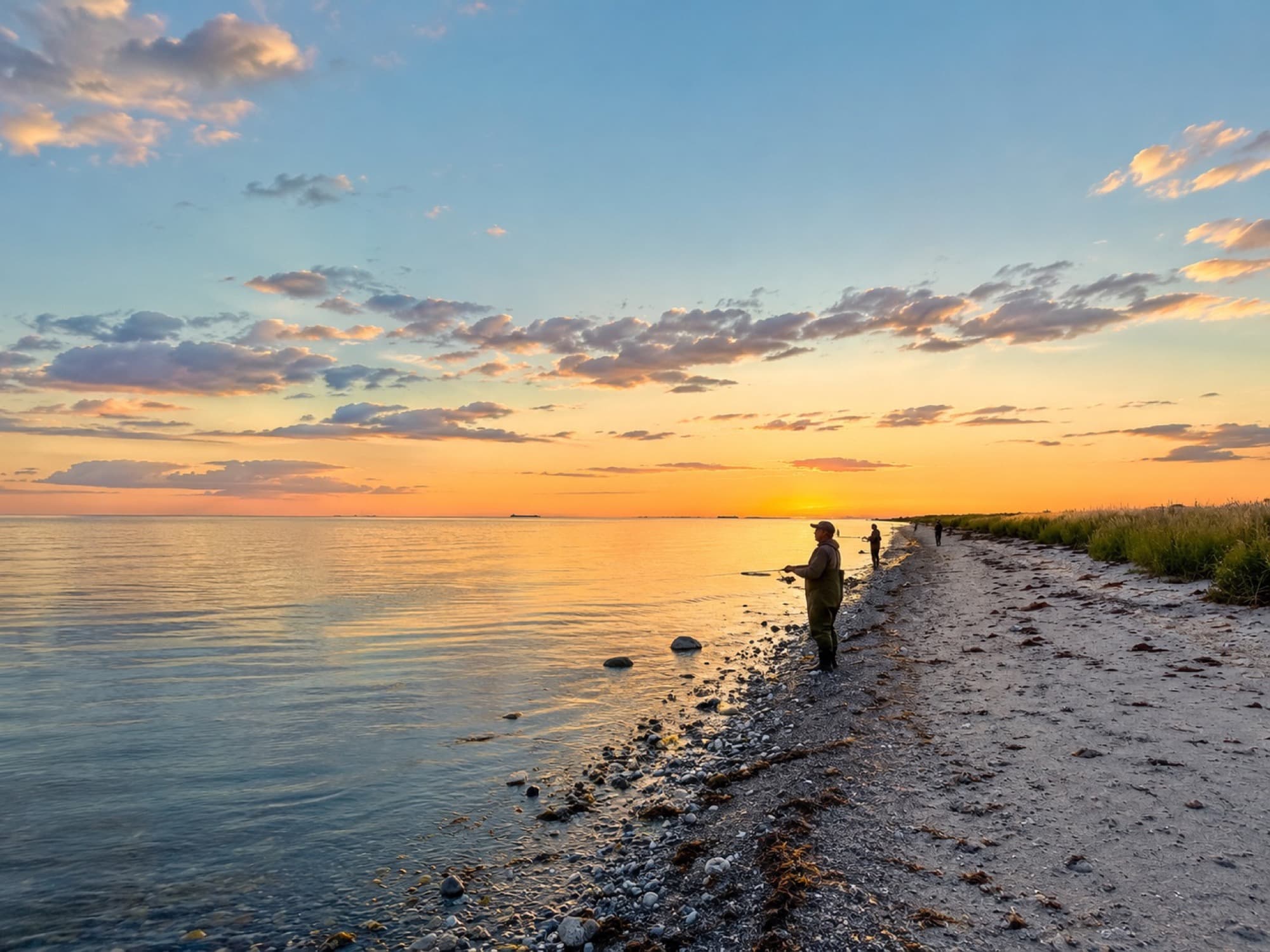
Fishing in North Langeland
The complete guide to coastal fishing for sea trout, garfish and flatfish around Lohals, Hou and Dageløkke.
Standing on the coast north of Lohals early in the morning, it's easy to understand why so many anglers come back year after year. The sea is rarely completely still. Small waves roll in over the stones, porpoises occasionally surface further out, and the light changes almost minute by minute. Fishing here isn't only about catching a fish. It's just as much about being outdoors, feeling the wind, and following the coast while looking for the next reef, the next headland, or the next spot where a sea trout might be hiding.
North Langeland isn't a place with big signs or purpose-built fishing parks. Most fishing spots lie along the natural coastline, where steep banks, stone reefs, seaweed belts and small coves create good conditions for the fish. That's part of why the area is known among Danish coastal anglers for sea trout, but also garfish, flatfish and, at times, mackerel.
For many, the day starts long before sunrise. The car is parked on a small gravel patch, waders go on, and the rod is assembled as the light slowly breaks over the Great Belt. It's rarely busy. You might pass a single other angler who nods good morning before you both continue your own way along the beach. That's part of the charm of North Langeland — there's still room for quiet here.
Why so many anglers choose North Langeland
Looking at a map of Langeland, it's easy to see why the island's northern tip has earned a good reputation among coastal anglers. To the east lies the Great Belt with deep, oxygen-rich water, while the western side faces the calmer water between Langeland and Funen. That makes it possible to find a fishing spot suited to the day's wind and weather, almost regardless of conditions.
What makes the area special is that the coastline constantly changes character. Within a few kilometres you can move from large boulders to sandy bottom, on to dark seaweed belts, and out to long reefs where the current gathers food. That also means the fishing is never the same. Wind direction, season and water temperature can make one spot fantastic one week and nearly empty the next.
Which fish can you catch in North Langeland?
Sea trout is the area's most sought-after fish and draws anglers from all over the country. North Langeland is known for varied reefs, seaweed belts and stony bottom where sea trout feed year-round, and many fish patrol surprisingly close to shore — it's not unusual to catch fish within ten metres of the beach.
From late April through May, garfish move in towards the coast. They offer lively and relatively accessible fishing, and because they often shoal near the surface, this is a good period to introduce children or beginners to coastal fishing.
On sandy bottom and in deeper stretches there's also a chance at flatfish such as flounder, dab and plaice, typically fished with worm or small jigged spoons along the bottom. In late summer, mackerel can, in some years, come close to shore, especially around the deeper reefs towards the Great Belt.
Wind, current and choosing the right fishing spot
Often, the most important factor isn't the lure but standing in the right spot. Wind, current, water level and bottom conditions affect the fishing significantly. Wind moves water masses and food — light to moderate wind often creates good conditions, while strong wind can make one coast poor and another good on the very same day.
Because North Langeland has both an east coast facing the Great Belt and a west coast facing the South Funen Archipelago, you can almost always pick a fishing spot to suit the day's conditions instead of fishing into the wind. Seaweed belts, stone reefs and transitions between sand and stone are often the most interesting areas to focus on.
Early mornings and late evenings are especially good in summer, while spring and autumn often fish well for most of the day. Stay mobile, read the water, and watch for signs of life such as birds, small fish and movement on the surface — that's often the best indicator that fish are nearby.
Practical rules you should know
Everyone between the age of 18 and the state pension age needs a valid fishing licence to fish with rod and line in Denmark, including in salt water. It's bought online and is valid as a day, week or year pass. The recreational fishing licence (which also covers nets and traps) is more expensive and unnecessary if you only fish with a rod.
Sea trout have a minimum size of 40 cm, and coloured fish in spawning dress are protected from 16 November to 15 January — during that period, only silver, loose-scaled fish may be taken home from the coast. Undersized and protected fish must always be released as gently as possible.
Respect nature and local conditions: leave the coast as you found it, keep your distance from birds and seals, and be mindful of private land when accessing the beach. That kind of consideration is what keeps North Langeland a good place to fish for everyone.
Fishing calendar month by month
January–February
Winter sea trout in the coldest water — takes patience, but the fish can be close to shore.
March–April
Spring sea trout fishing as the water slowly starts to warm.
May–June
Garfish move in, and sea trout fishing continues.
July–August
Best in the morning and evening hours, with a chance of mackerel at times.
September–November
One of the best periods of the year for sea trout, before the protected season begins in mid-November.
December
Quiet winter fishing — from mid-month, only silver fish may be taken home.
10 fishing spots in North Langeland
From quiet coves to open reefs facing the Great Belt — here are ten concrete places to start. Use the list for inspiration, but choose your spot based on the day's wind and water conditions. On North Langeland, a difference of just a few kilometres can matter a great deal for the fishing.
Fishing
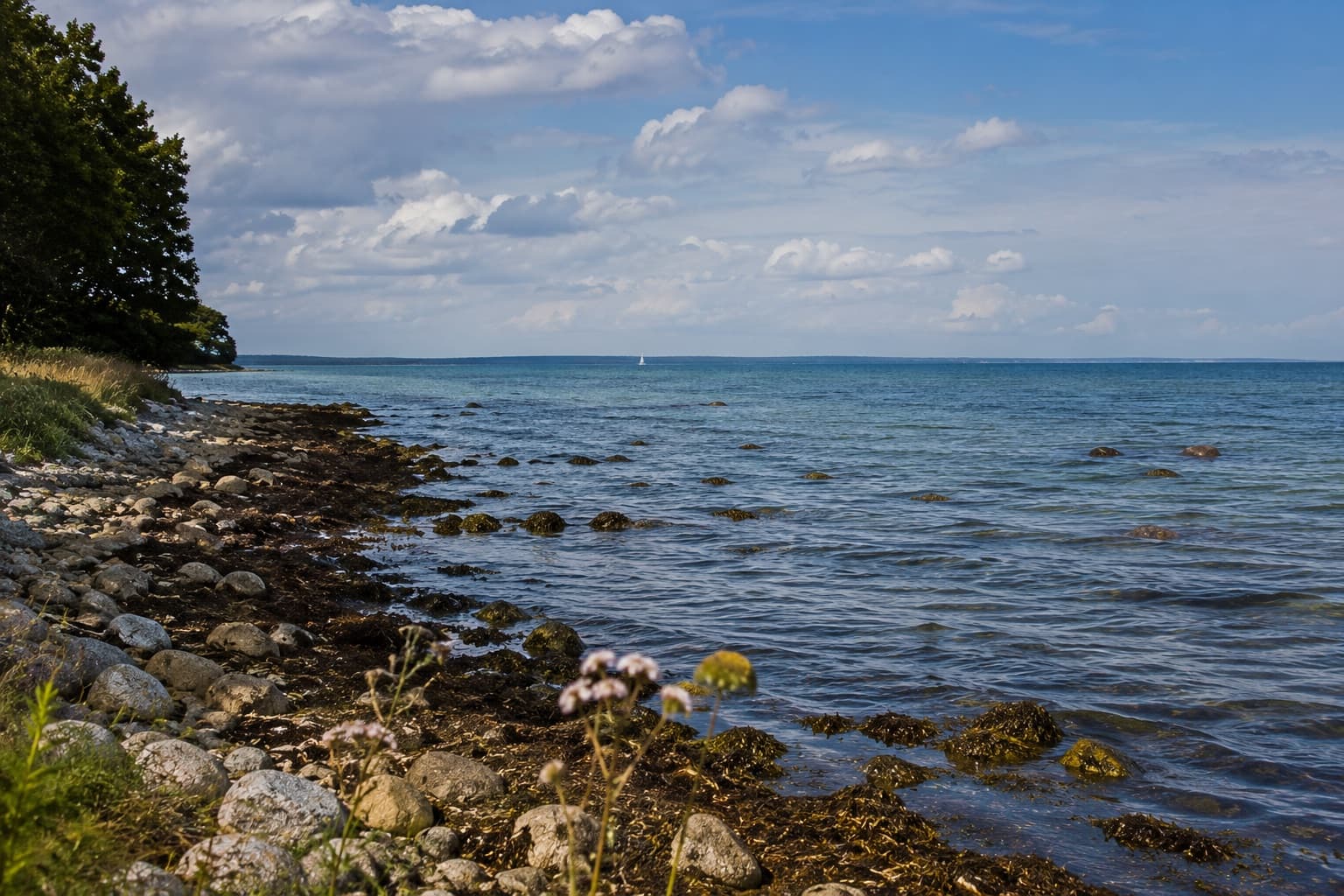
Pæregård Strand
One of Langeland's best-known sea trout spots, with stony bottom, seaweed and deeper water close to shore.
Fishing
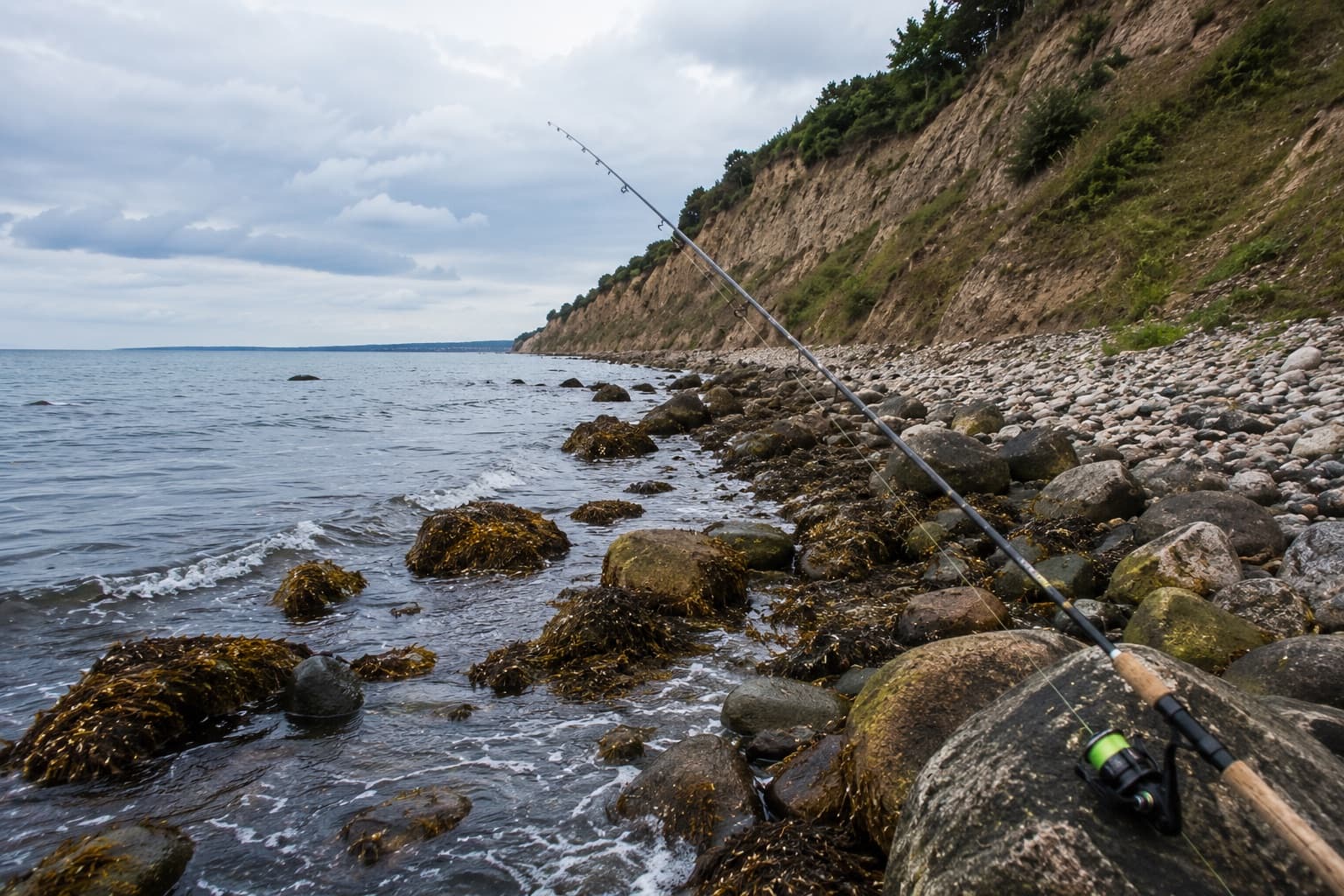
Frankeklint
A steep coastline with varied bottom, especially interesting to fish in spring and autumn.
Fishing
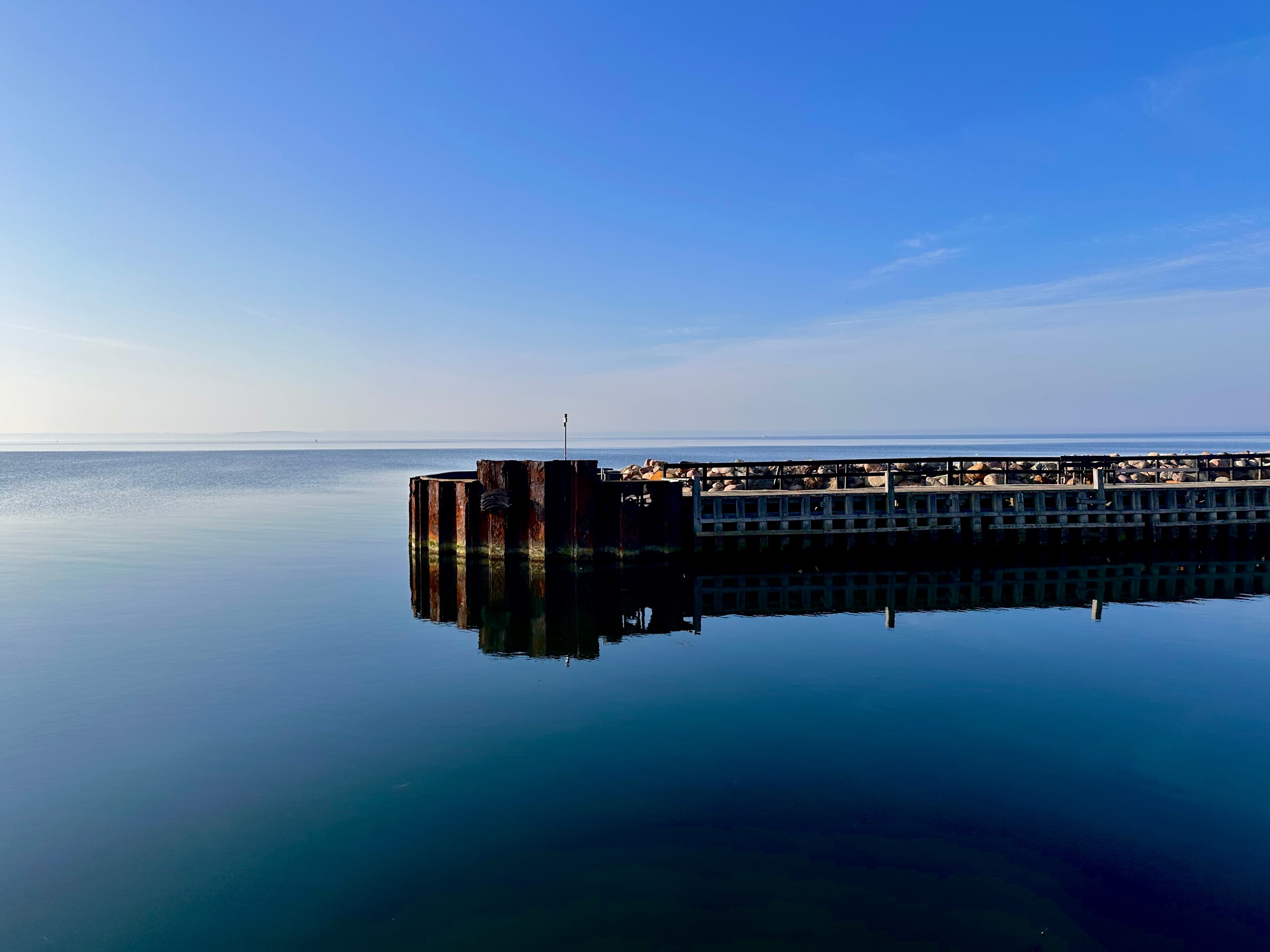
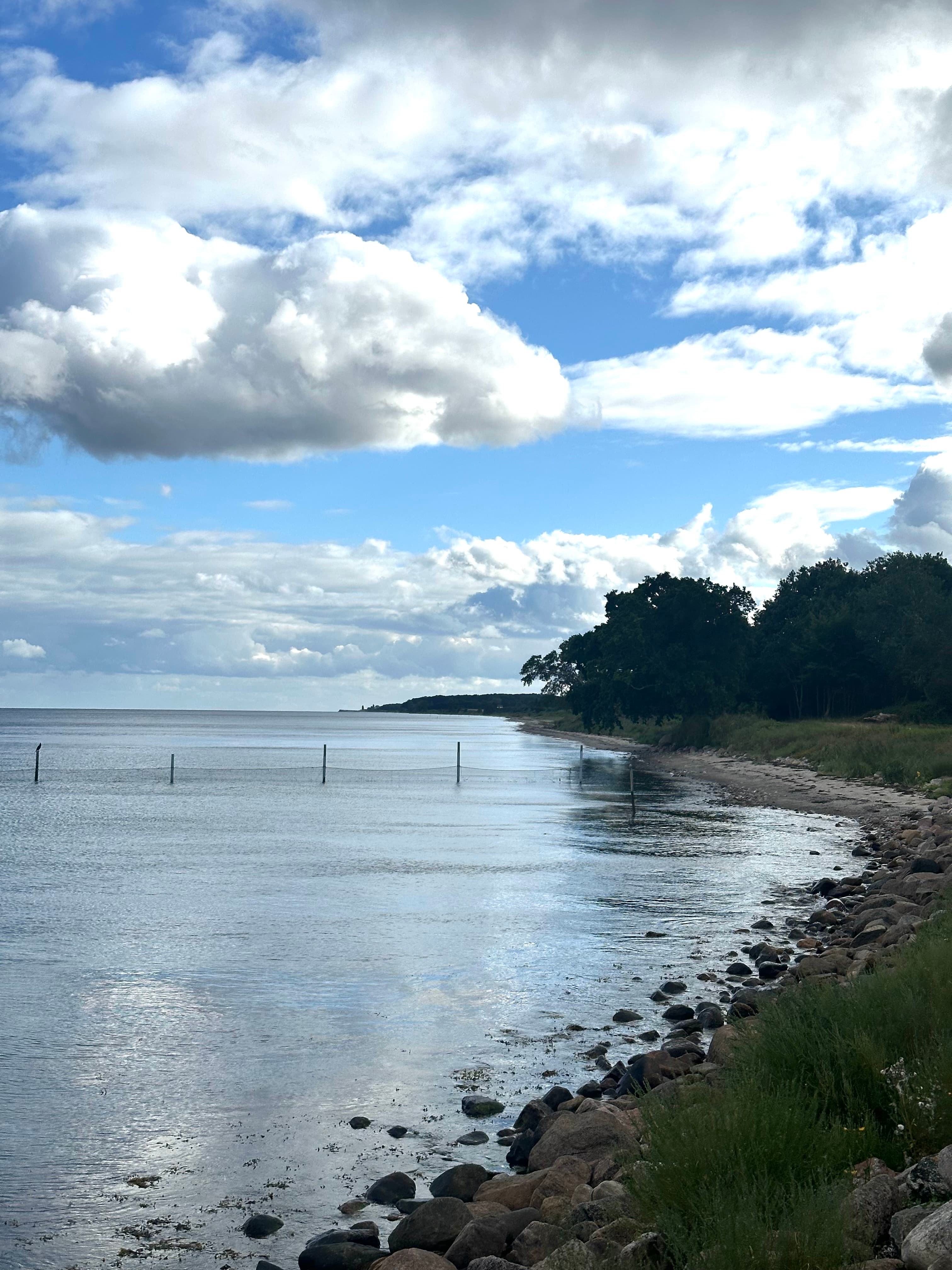
Fishing at Lohals Havn
The breakwaters and coastline by the harbour offer easy access and varied fishing.
Fishing
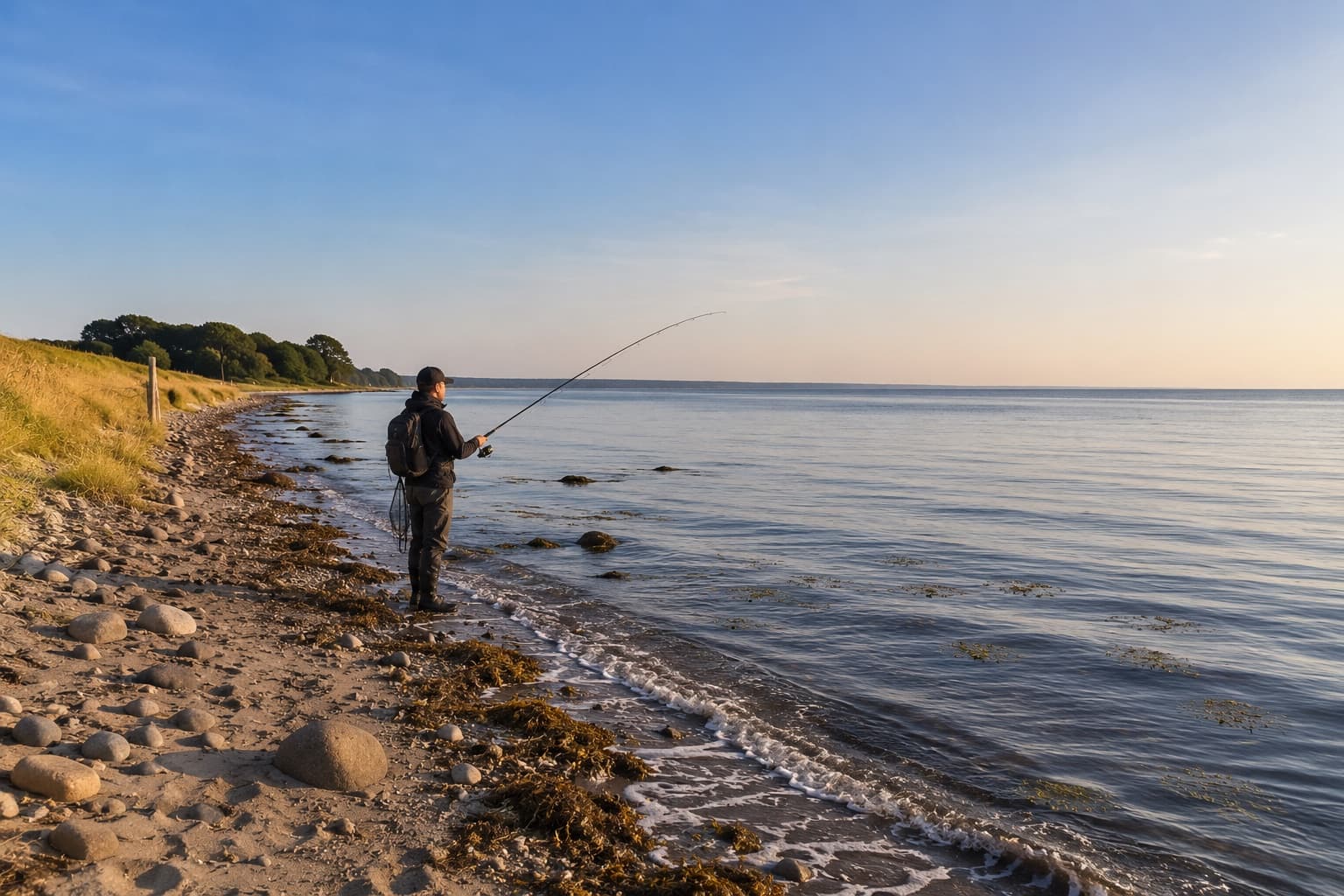
Hou Fyr
A classic headland where the current often concentrates food.
Fishing
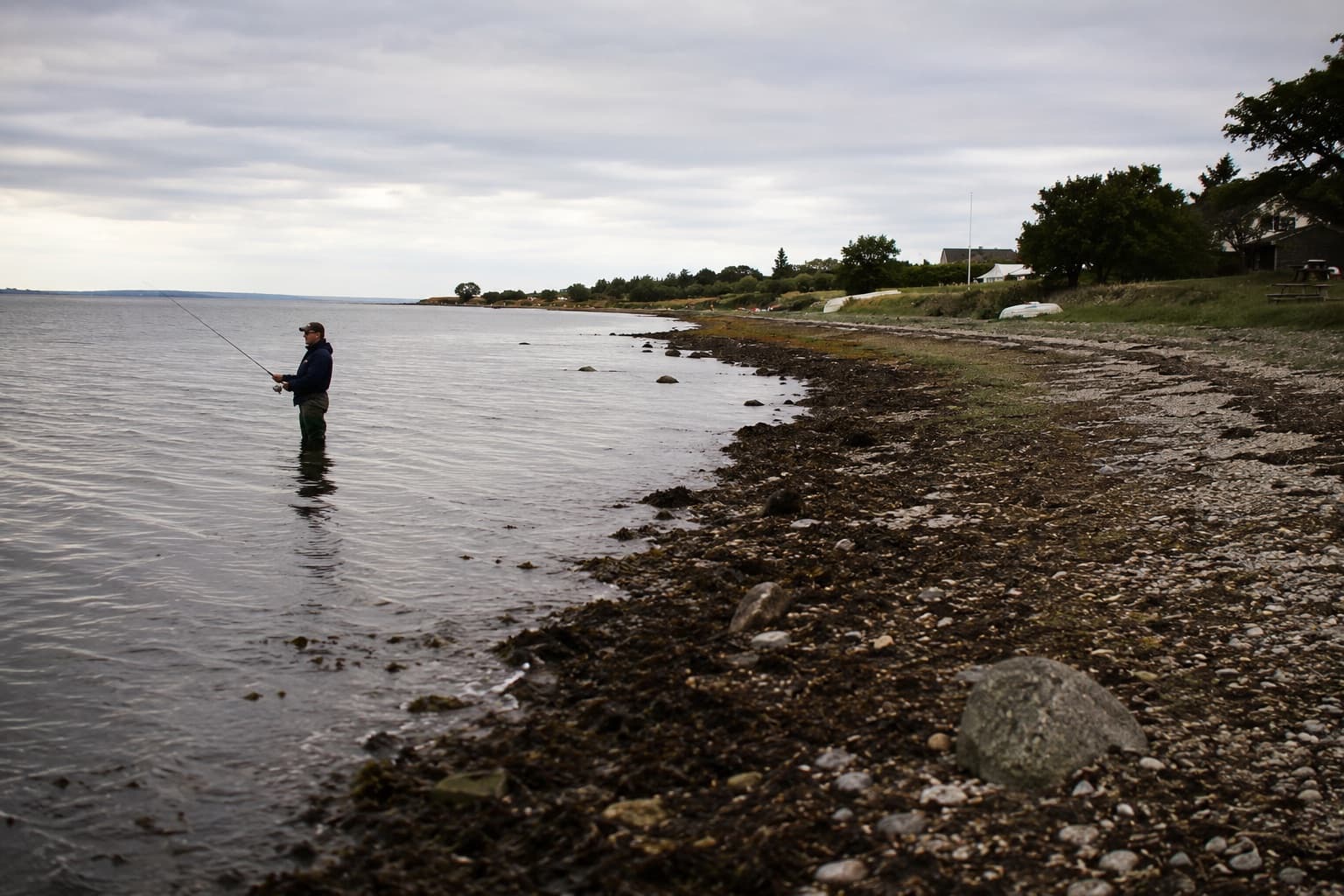
Dageløkke
Mixed sand and stone bottom, good for long fishing walks along the coast.
Fishing
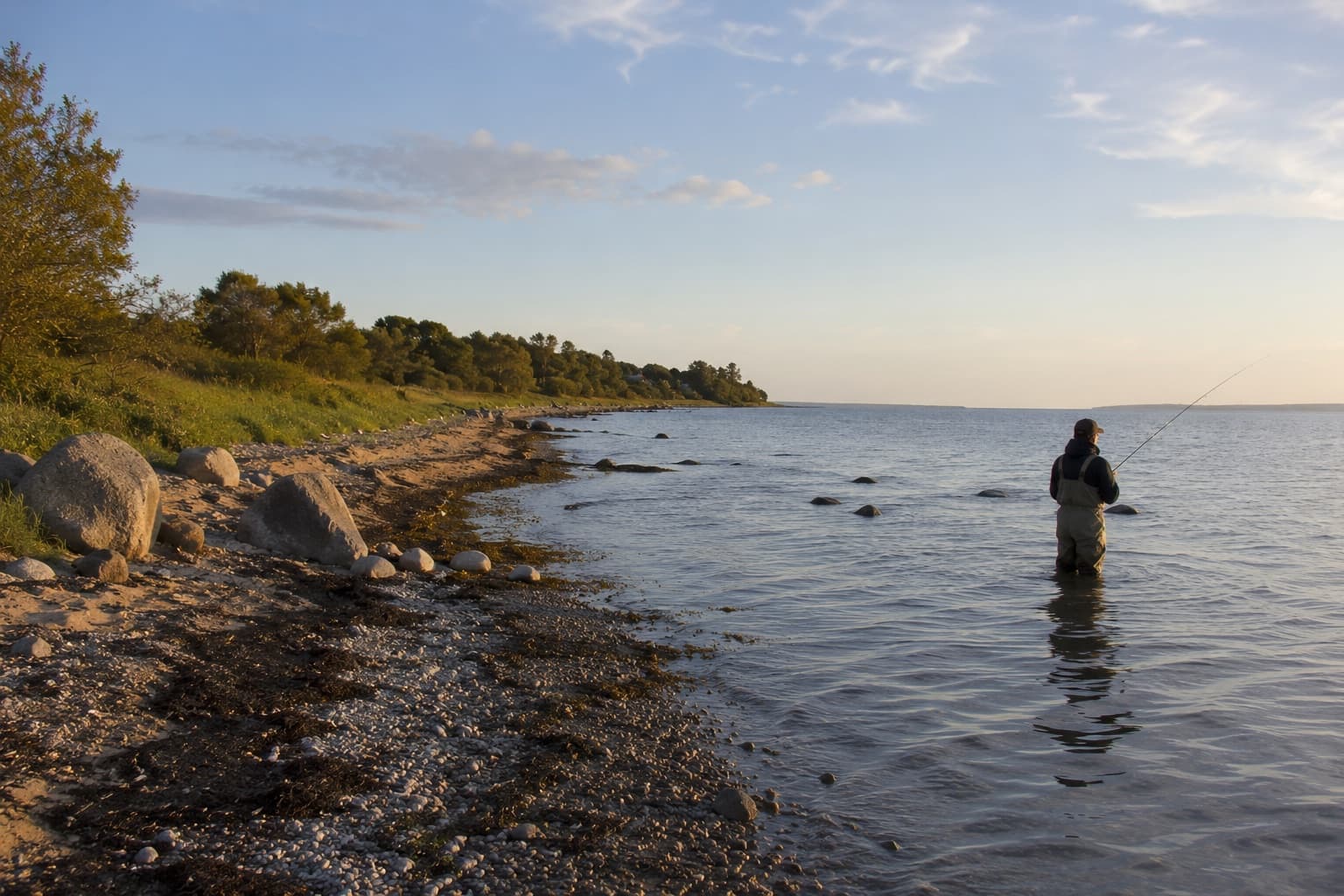
Stoense Udflytter
A long, peaceful stretch of coast for the active shore angler.
Fishing
Botofte Strand
A calm spot with shallow water and good chances in the cold season.
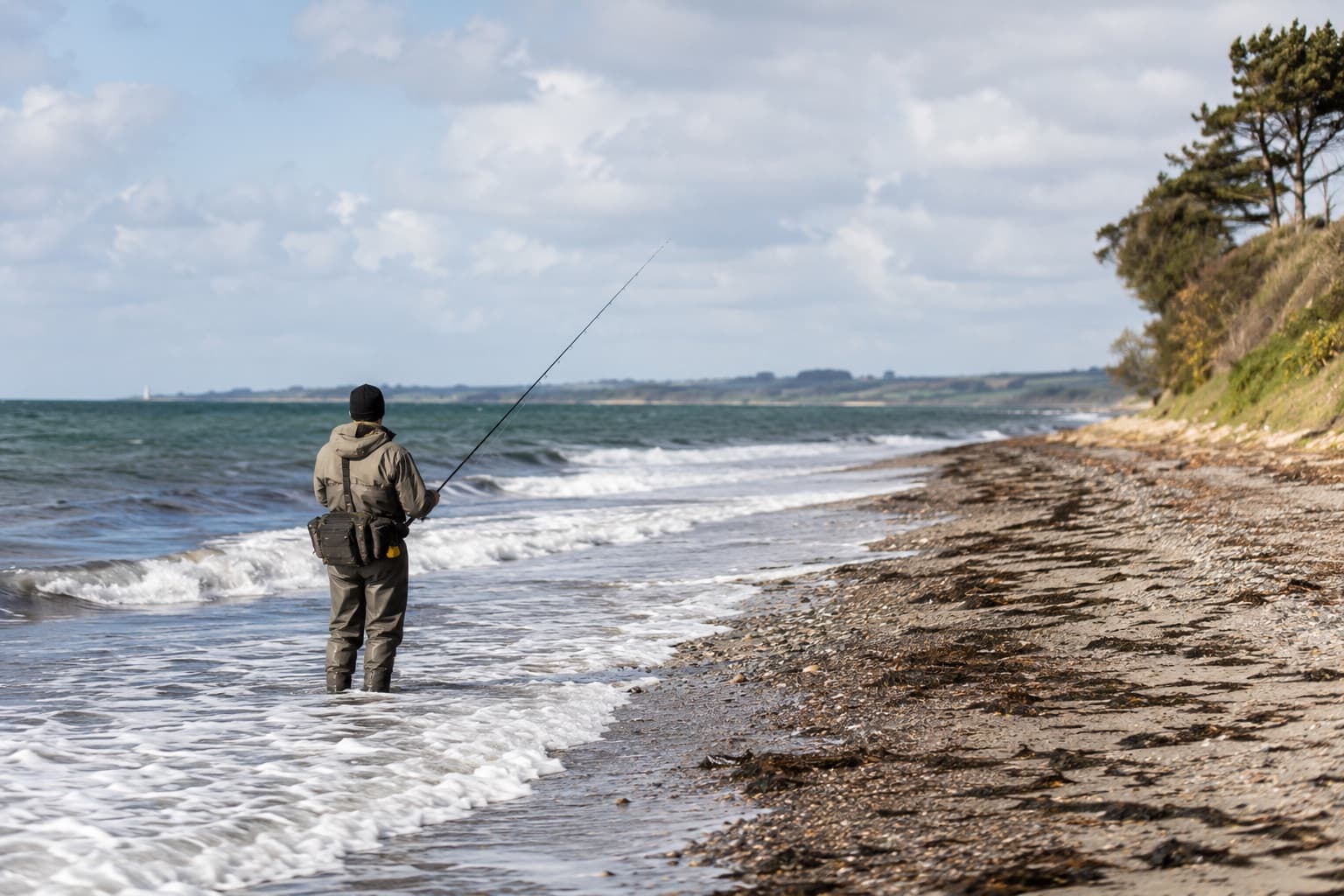
Fishing
Snøde Øre
Reefs and current conditions make the area interesting for sea trout.
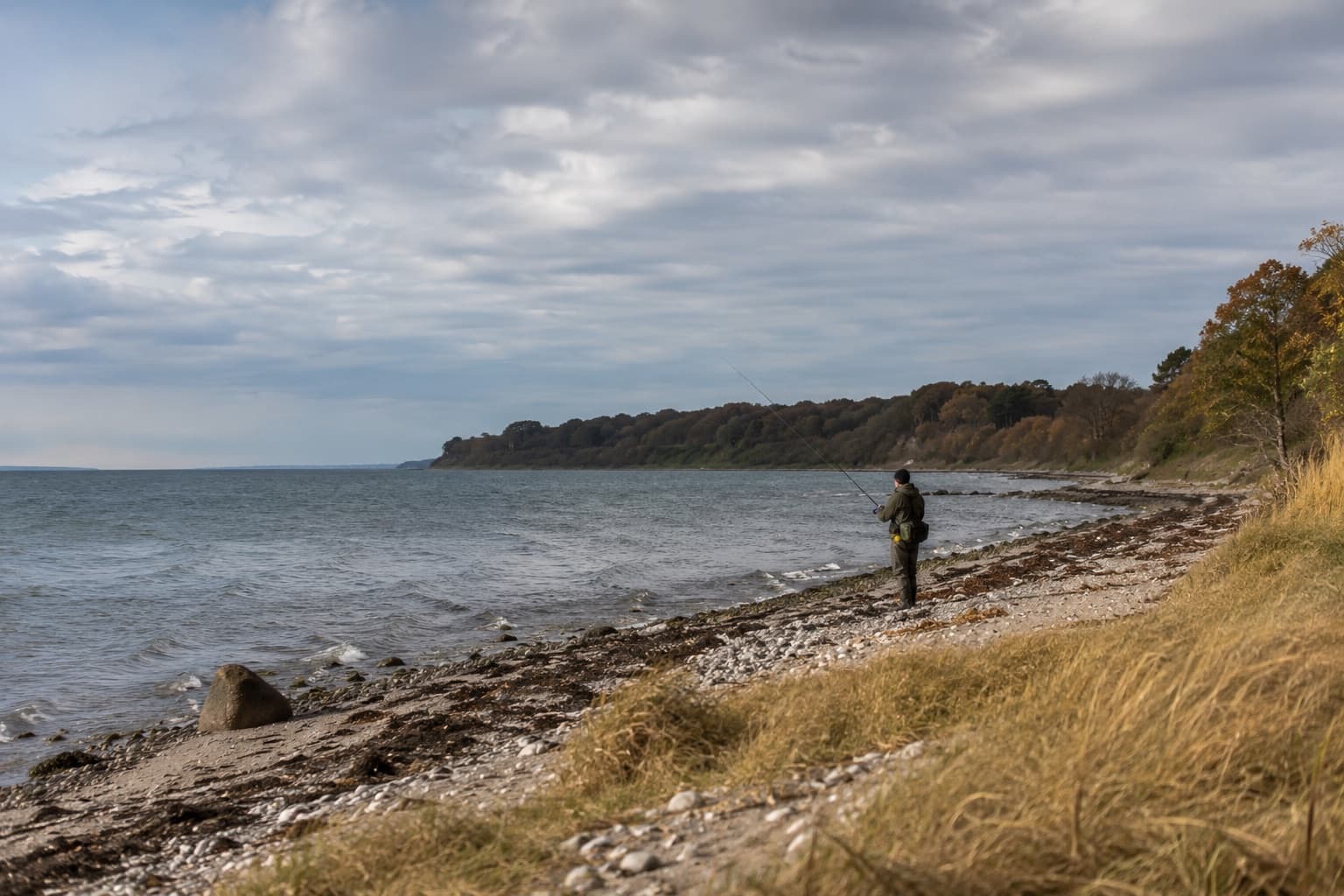
Fishing
Karskov
A natural coastline with plenty of room and few visitors.
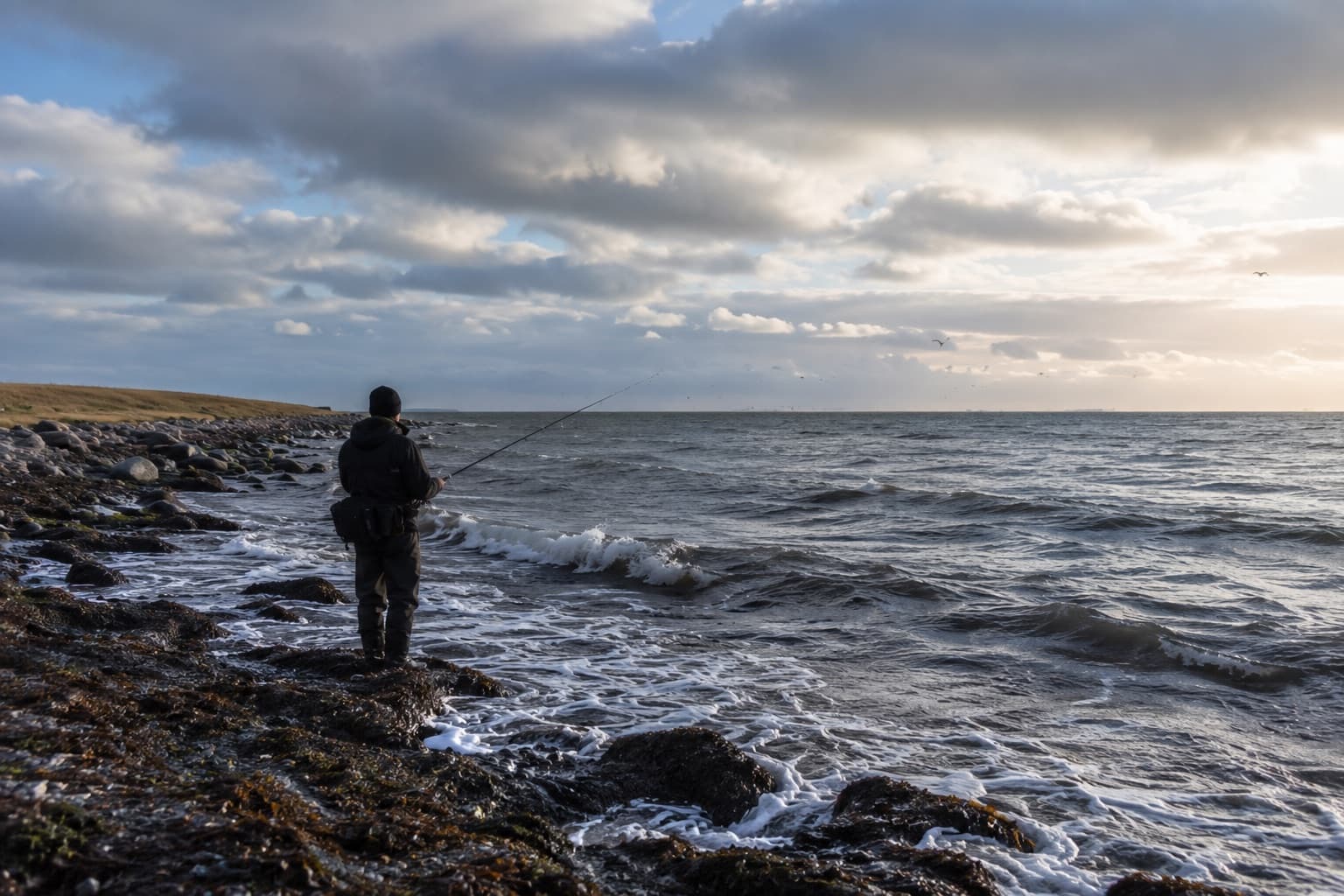
Fishing
The northern tip at Hov
An exciting area when wind and current align.
Frequently asked questions about fishing
Do I need a fishing licence to fish at North Langeland?
Yes. Everyone between 18 and the state pension age needs a valid fishing licence to fish with a rod, including from the shore. It's bought online and available as a day, week or year pass.
When is the best time to catch sea trout?
September to November is generally considered one of the best periods, but sea trout can be caught year-round. Winter and spring often require more patience.
Can I take all sea trout home?
No. The minimum size is 40 cm, and coloured fish in spawning dress are protected from 16 November to 15 January. During that period, only silver, loose-scaled fish may be taken home.
Do you need to cast far out to catch fish?
Not necessarily. Sea trout often patrol surprisingly close to shore, especially along stone reefs and seaweed belts, so a short cast can easily be enough.
Is North Langeland suitable for children and beginners?
Yes, especially the garfish season from late April to May, when the fish often shoal near the surface in large numbers. That makes for fast, accessible fishing.