Wildlife in North Langeland
A guide to the wildlife, birds, plants and nature of North Langeland — from the rare black squirrel near Lohals to cranes, harbour porpoises and Natura 2000.
North Langeland isn't the place in Denmark people usually visit for big bird migrations — that honour belongs to the island's southern tip. But just north of Lohals lives one of Denmark's rarest mammals, cranes breed near Tranekær, and harbour porpoises and seals move along an old glacial ridge line that continues underwater all the way to Korsør.
This guide gathers what makes North Langeland's nature genuinely distinctive — not invented or exaggerated, but the concrete species, places and stories that actually exist here.
A rare mammal right by Lohals
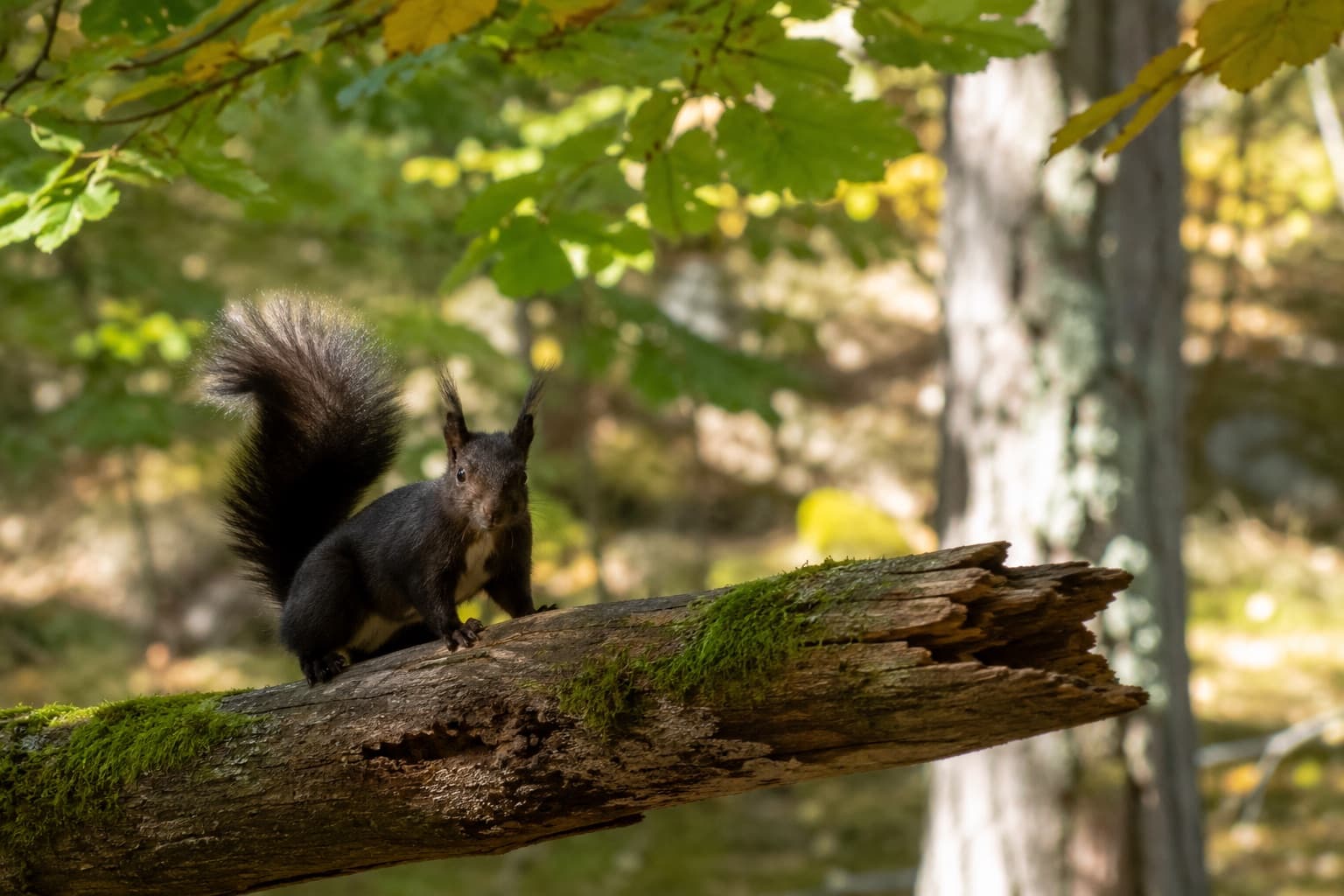
North of Lohals, 27 black squirrels — a Danish subspecies that had otherwise almost disappeared — were released in 2011-2012. The population survives today partly thanks to local residents who feed them, making this corner of Langeland one of the best places in the country to see the animal.
Cranes, porpoises and a vanished glacial ridge
The name Tranekær itself comes from cranes, and today the species breeds in the area again. Out in the Great Belt, the waters around Vresen are designated a Natura 2000 area for, among others, harbour porpoises, eider ducks and sandwich terns — and the glacial ridge that runs through Langeland actually continues beneath the sea surface in an arc from Lohals to Korsør.